
Kangra district offers far more than a stay in Dharamshala. The region brings together tea-growing landscapes, Tibetan cultural centres, village life, paragliding country and historic architecture. Rather than trying to cover every attraction in a day, group places by area and give each stop enough time.
Dharamshala and McLeod Ganj
These neighbouring destinations are useful starting points for mountain views, cafés, markets and Tibetan cultural institutions. Visitors should be mindful that monasteries and religious centres are active places of worship and learning. Follow site instructions, keep noise low and ask before taking photographs.
Palampur and the tea-growing landscape
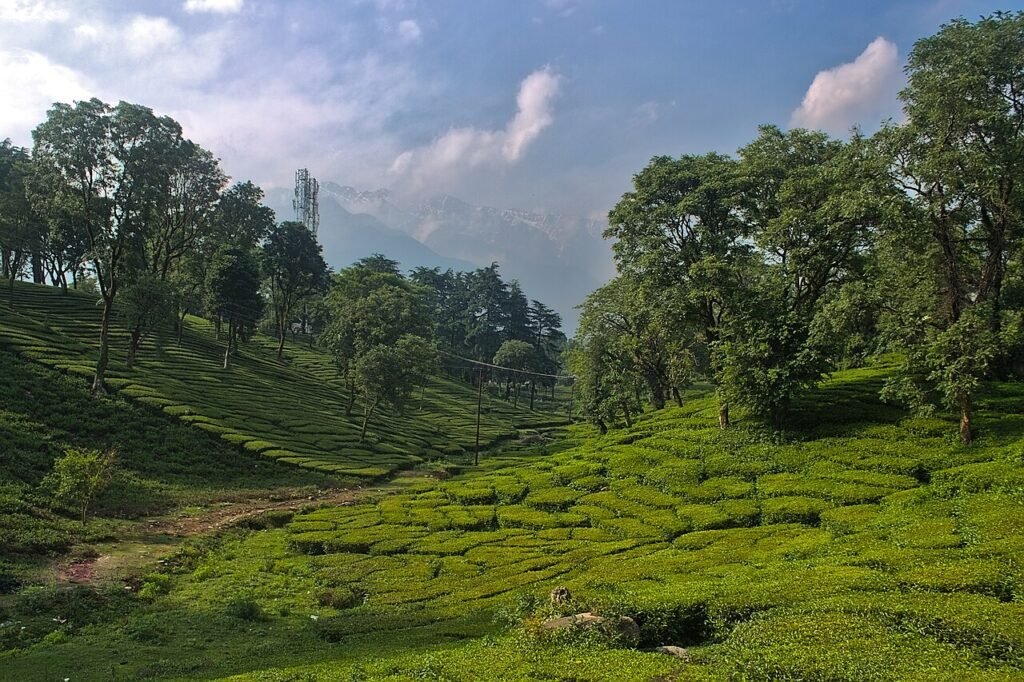
Palampur is known for its tea gardens and views towards the Dhauladhar range. Enjoy public viewpoints and roads, but do not enter private estates or working areas without permission. A relaxed visit can include a walk, a local café and time to learn about the area’s tea-growing identity.
Bir and Billing
Bir is known for its village atmosphere, monasteries, cafés and access to paragliding activity around Billing. If you plan to fly, choose a properly qualified and locally authorised operator, check weather and operating permissions, and accept that flights can be cancelled. Do not treat a booking as a guarantee that conditions will be suitable.
Explore Kangra’s heritage
Kangra Fort offers a window into the region’s layered history, while the Masroor Rock-cut Temples are known for their remarkable stone architecture. Baijnath is another important heritage and religious stop. Check opening times, access rules and any current conservation restrictions before travelling. Treat active religious sites respectfully.
How many days do you need?
Three to five days is a useful starting point for a focused Kangra visit, depending on your arrival point and interests. You might spend time around Dharamshala and McLeod Ganj, move towards Palampur, then plan Bir or a heritage excursion. The best order depends on current transport and road conditions.
Practical planning tips
- Group nearby places to reduce unnecessary backtracking.
- Confirm transport and accommodation, especially in quieter seasons.
- Check weather before outdoor activities and keep a flexible plan.
- Carry cash for smaller businesses and remote stops.
- Ask permission before photographing people or entering private land.
For a slower approach to the region, see our guide to slow travel in Himachal Pradesh.
How to group Kangra attractions into a workable itinerary
Kangra is easier to explore when you group places by area. Dharamshala and McLeod Ganj can form one part of the trip; Palampur and nearby tea-growing areas another; Bir and Billing need time for their own village and adventure setting. Kangra Fort and the Masroor rock-cut temples are separate heritage outings, so check their locations and travel times before combining them with other stops.
- Two days: Spend time around Dharamshala and McLeod Ganj, then choose one nearby outing based on your interests.
- Three days: Add Palampur or Bir as a separate day, allowing for road time and breaks.
- Four or more days: Consider adding a heritage-focused excursion to Kangra Fort or Masroor, after checking opening arrangements and transport.
These are broad planning examples, not guaranteed drive schedules. Traffic, weather, road works and the time spent at each site can change the day considerably. Avoid trying to cover Dharamshala, Palampur, Bir, Kangra Fort and Masroor in one rushed circuit.
Plan adventure activities with safety in mind
Bir and Billing are associated with paragliding, but an activity should only be booked with a properly operating provider and when conditions permit. Ask about the pilot’s qualifications, equipment checks, insurance and the operator’s cancellation policy. Do not pressure a pilot to fly when weather is unsuitable. If you are not taking part, the area can still be enjoyed for its village setting, cafés and views.
Heritage visits deserve time and context
Kangra Fort and the Masroor rock-cut temples offer a different perspective on the district beyond its mountain scenery. Check current access, visiting hours and any site-specific rules before setting out. Wear comfortable footwear, carry water and avoid touching or climbing on fragile structures. At religious sites, follow local guidance and be considerate of worshippers.
Practical tips for moving around
Choose accommodation that reduces unnecessary backtracking. Confirm transport arrangements before relying on late connections, and allow extra time between stops. Carry cash, sun protection and a light layer. If you are using taxis, agree on the route, waiting time and fare in advance. A slower itinerary will usually give you a better sense of how the district changes from tea gardens to heritage sites and mountain settlements.
Explore related Himachal travel guides
Frequently asked questions
How many days are enough for Kangra?
Three to five days gives many visitors time to explore a few areas without rushing. Add days if you want longer walks, village stays or more heritage stops.
Is Palampur worth visiting from Dharamshala?
Palampur offers a different landscape and pace, with tea-growing areas and views of the Dhauladhar range. It can make a useful addition to a Kangra itinerary.
Can beginners try paragliding in Bir Billing?
Visitors should use qualified, locally authorised operators and follow current safety instructions. Weather and operating permissions determine whether a flight can take place.
What heritage places can I visit in Kangra?
Examples include Kangra Fort, Masroor Rock-cut Temples and Baijnath. Check current visitor access and follow site-specific rules.
Can I cover Dharamshala, Palampur and Bir in one day?
It is possible to pass through multiple places, but doing so can make the day rushed. A multi-day plan gives you more time and reduces unnecessary road pressure.
Independent travel guide. Confirm current opening, access, weather and activity conditions before departure.